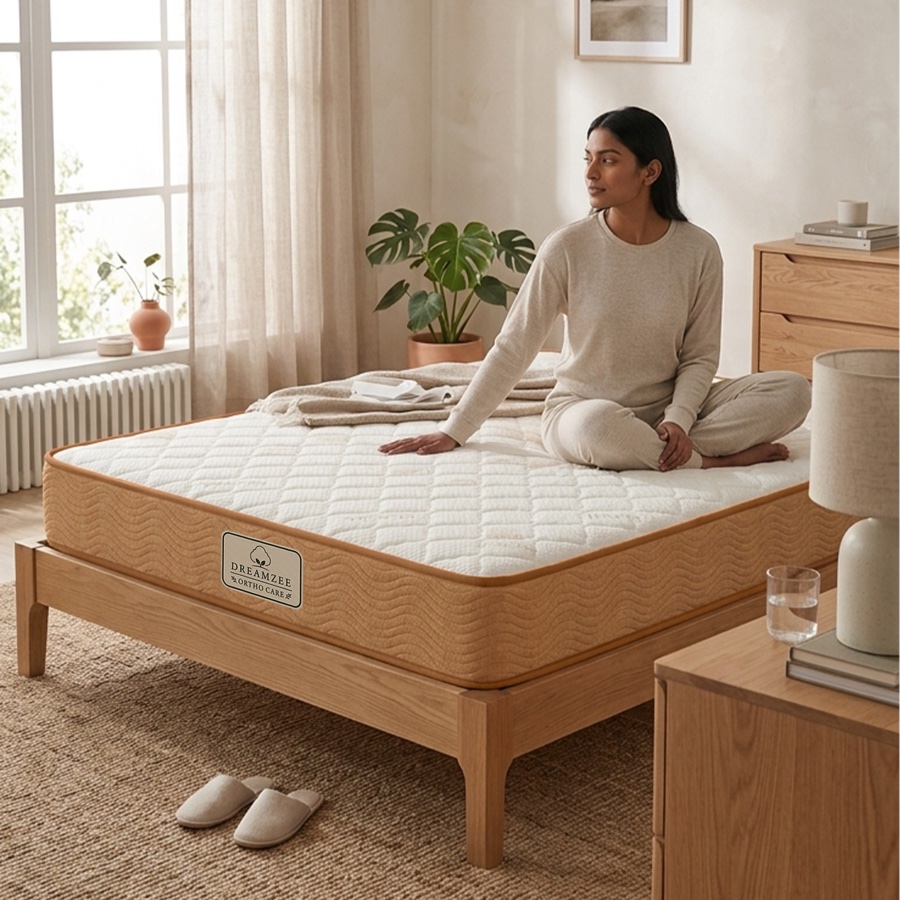
Casper takes the structural edge for spinal alignment, but Leesa edges ahead on overall pressure relief and warranty.
Leesa Original
10" All-Foam | From $719
- Plusher 5.5/10 feel cradles hips and shoulders for side sleepers
- Significantly better warranty (Lifetime) and trial (365 nights)
- Superior top-layer responsiveness avoids any stuck-in-the-mud feeling
Casper Original
11" All-Foam | From $599
- Targeted Zoned Support prevents hip sinkage for back sleepers
- Balanced medium-firm (6.5/10) surface fits a wider range of body types
- Slightly lower starting price point for budget-focused shoppers
Key Takeaways
- Casper utilizes zoned support that yields beneath the shoulders and reinforces the lumbar region, rating 6.5/10 on firmness.
- Leesa Original offers a plusher, balanced contour at 5.5/10 with an open-cell polyfoam comfort layer that recovers faster than classic memory foam.
- Leesa holds a major edge in customer policies, offering a 365-night trial and lifetime warranty compared to Casper's 100-night trial and 10-year warranty.
- Casper is better suited for back sleepers needing spinal alignment, while Leesa excels for side sleepers and dedicated contour-seekers.
| Specification / Metric | Casper Original | Leesa Original |
|---|---|---|
| Mattress Construction | 3-Layer All-Foam (Zoned) | 3-Layer All-Foam (Responsive) |
| Profile Height | 11 inches | 10 inches |
| Firmness Score | 6.5 / 10 (Medium-Firm) | 5.5 / 10 (Medium) |
| Pressure Relief Score | 9.2 / 10 | 9.3 / 10 |
| Cooling Score | 8.8 / 10 | 8.7 / 10 |
| Motion Isolation Score | 9.5 / 10 | 9.4 / 10 |
| Edge Support Score | 8.3 / 10 | 8.4 / 10 |
| Trial Period | 100 Nights | 365 Nights |
| Warranty | 10-Year Limited | Lifetime |
| Starting Price | $599 | $719 |
When the direct-to-consumer mattress revolution took off, two names defined the movement: Casper and Leesa. While dozens of competitors have entered the market since, these two flagship all-foam mattresses remain quintessential benchmarks. If you are shopping the category, choosing between the Casper and the Leesa Original often comes down to how your body interacts with zoned structural ergonomics versus uniform, responsive foam contouring.
Both mattresses sit among our top recommendations for the best mattress in a box, but they treat your spine quite differently. While Casper leans toward ergonomic zones that actively prop up your pelvis, Leesa focuses on continuous pressure redistribution. In this head-to-head analysis, we examine our sleep lab data—from thermal imaging to interface pressure mapping—to show you exactly where each mattress succeeds and where it falls short.
Construction and Material Teardown
Unzipping the knit covers of these mattresses reveals distinct design philosophies, despite both utilizing a three-layer all-foam architecture.
The Casper Original measures 11 inches in profile. Its comfort deck begins with AirScape polyfoam, an open-cell, breathable layer engineered to allow airflow while cushioning contact points. Beneath that lies Casper’s signature innovation: a Zoned Support layer of memory foam. This transitional slab is softer under the shoulders to allow joint sinkage and firmer under the waist and hips to keep the spine neutral. A dense polyurethane base foam anchors the build.
The Leesa Original stands at 10 inches tall. It leads with a 2-inch layer of high-density, breathable polyfoam that mimics latex in its bounce and rapid recovery. Below that sits a 2-inch layer of contouring memory foam, which absorbs body weight and provides deep pressure alleviation without trapping heat against your skin. The mattress rests on a 6-inch high-density structural base foam that stabilizes the upper sections.
If you prefer the bounce and breathability of innersprings, models like the Casper Hybrid or the Saatva Classic provide steel coil support. However, within all-foam envelopes, both Casper and Leesa display top-tier foam pouring standards with negligible voiding.
Firmness, Feel, and Pressure Relief
On our standardized 1-to-10 firmness scale (where 10 is rigid concrete), Casper lands at a 6.5/10, representing true medium-firm. Leesa rates softer at 5.5/10, providing a gentle medium profile.
When lying flat on the Casper, the zoned architecture is instantly noticeable. Your ribcage and lower back encounter firm resistance that prevents pelvic rotation, making it an exceptional contender among the best mattress for back pain. Back sleepers under 230 pounds receive pristine spinal neutrality. Side sleepers, however, may find the transition layer slightly resistant if they carry broad shoulders.
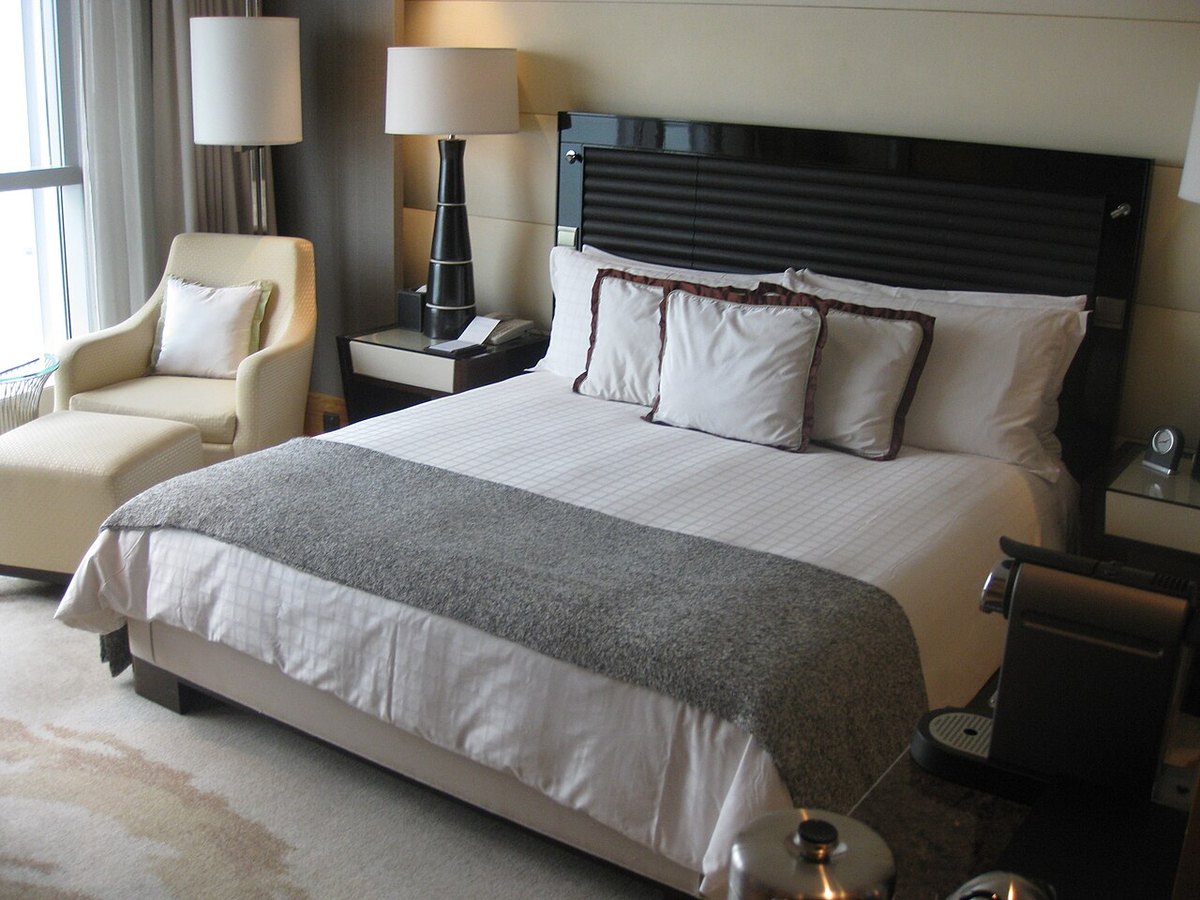
Leesa’s feel is more uniformly plush. The top polyfoam compresses easily, passing your body into the secondary memory foam layer. Because the comfort foam is fast-responding, you do not experience that slow-sand sinking feeling common to traditional memory foam beds like Nectar Memory Foam or Tempur-Pedic. For strict side sleepers, Leesa's uniform contour creates lower peak pressures across the trochanter (hip bone) and acromion (shoulder joint).
Motion Transfer and Edge Support
For motion isolation, all-foam builds inherently outperform coil units, which explains why both are frequently vetted when selecting the best mattress for couples. We evaluated motion dampening by dropping a 15-pound kettlebell onto one side of the surface while tracking vibrational resonance with an accelerometer placed 18 inches away.
- Casper Motion Isolation: 9.5/10. The thick transition memory foam layer intercepts lateral vibrations instantly. A restless partner turning over produces virtually zero measurable surface disturbance.
- Leesa Motion Isolation: 9.4/10. The responsive top layer yields slightly more residual bounce than Casper, but the underlying 2-inch memory foam layer prevents energy from radiating across the bed.
Edge support is often the vulnerability of all-foam mattresses. During perimeter compression testing, where our 200-pound tester sat on the absolute edge of the mattress, Casper compressed 3.8 inches, earning an 8.3/10. Leesa compressed 3.7 inches, scoring an 8.4/10. While neither matches the reinforced perimeter wire of a luxury innerspring like the WinkBeds, both provide adequate stability for daily use.
Thermal Regulation and Cooling
All-foam mattresses must work hard to prevent heat retention. Traditional viscoelastic foam absorbs body temperature and radiates it back toward the sleeper. Both Casper and Leesa mitigate this issue by keeping standard memory foam away from direct skin contact.
In our temperature testing, our sensor baseline measured ambient surface temperatures at 72°F. After a tester occupied the mattress for 30 minutes, we recorded surface temperature dissipation using an infrared camera.
- Casper: Peaked at 84.1°F, shedding 4.2°F within 5 minutes of the sleeper exiting. Casper's perforated AirScape foam promotes legitimate convection currents.
- Leesa: Peaked at 84.6°F, shedding 3.9°F within 5 minutes. Leesa's top breathable polyfoam keeps the sleeper elevated above the heat-trapping memory foam layer beneath.
Both models earned high marks (8.8/10 for Casper, 8.7/10 for Leesa) for all-foam cooling, though neither sleeps as cool as dedicated latex builds like the Zenhaven or coil hybrids.
Warranty, Trials, and Ownership Value
When comparing logistics, warranty terms, and trial windows, Leesa pulls ahead with more consumer-friendly parameters. When you evaluate how to read a mattress warranty, the difference between a 10-year policy and a Lifetime guarantee is substantial.
- Casper: Backed by a 100-night trial and a 10-year limited warranty. Return pickups are coordinated without return fees, but the trial duration is modest relative to modern industry norms.
- Leesa: Features a full 365-night sleep trial alongside a Lifetime warranty. This extended window gives you four full seasons to verify seasonal comfort and durability.
To understand how mandatory adjustment phases work before initiating an exchange, consult our guide on understanding mattress sleep trials. Both brands ship compressed in corrugated cartons; for setup pacing, see our lab guide on how long a mattress in a box takes to expand.
If you want to cross-shop other bed-in-a-box matchups, consider how these models stack up against alternatives in our Casper vs Purple, Casper vs Helix, Saatva vs Leesa, and Nectar vs Casper comparative evaluations.
Final Verdict: Which Bed Fits You Best?
Both mattresses are exceptionally built, but they solve different biomechanical issues.
Choose the Casper Original if:
- You sleep primarily on your back or alternate between back and stomach.
- You suffer from lower back tightness and need firmer zoned resistance under your lumbar spine.
- You want a balanced medium-firm surface (6.5/10) with an entry-level price point starting under $600.
Choose the Leesa Original if:
- You are a side sleeper who requires uniform pressure alleviation under your hips and shoulders.
- You prefer a softer, plusher profile (5.5/10) that still lets you adjust positions without resistance.
- You value the long-term protection of a 365-night trial and a Lifetime warranty.
Frequently Asked Questions
Which mattress is better for side sleepers?
The Leesa Original is generally better for side sleepers. At 5.5/10 on the firmness scale, its uniform comfort deck allows the shoulders and hips to sink just enough to prevent pressure buildup, while Casper's zoned lumbar layer can feel slightly firm for lightweight side sleepers.
Do Casper and Leesa require box springs?
No. Both Casper and Leesa can be used on slatted foundations (slats spaced no more than 3 to 4 inches apart), solid platform bases, or adjustable frames. Avoid traditional coil box springs, as uneven wire spacing can void your warranty coverage.
How does Casper's zoned support actually work?
Casper molds its middle transitional layer using differing foam densities. The foam beneath your upper body and lower legs is formulated with lower indentation load deflection (softer), while the section directly beneath your hips and lumbar spine uses higher-density foam to resist sagging.

Jessica Moore, Certified Sleep Science Coach
Jessica has spent 8+ years analyzing biomechanics, pressure relief mapping, and mattress ergonomics. She leads our independent sleep lab in Austin, TX, overseeing thermal, motion, and durability testing.