

Key Takeaways
- Sub-$1,000 mattresses often cut costs in high-density base foam and coil perimeter reinforcement, making lab stress testing critical.
- Memory foam models under $500 excel at motion isolation but consistently run 3 to 4 degrees warmer than hybrid builds.
- Proper support bases prevent premature sagging; pairing a budget mattress with the wrong foundation often voids manufacturer warranties.
- The sweet spot for budget durability is 1.8+ lb/cu. ft. foam density or 14-gauge pocketed steel coils with tempered edges.
| Mattress | Design Type | Firmness (1-10) | Edge Support | Cooling Score | Sleep Trial | Starting Price |
|---|---|---|---|---|---|---|
| Nectar Memory Foam | All-Foam | 6.5 / 10 | 7.8 / 10 | 7.2 / 10 | 365 nights | $349 |
| DreamCloud Premier | Pocketed Coil Hybrid | 6.5 / 10 | 8.6 / 10 | 8.8 / 10 | 365 nights | $699 |
| Saatva Classic | Dual-Coil Innerspring | Plush, Lux Firm, Firm | 9.4 / 10 | 9.1 / 10 | 365 nights | $1,095 |
| Standard Budget Bed-in-a-Box | Entry All-Foam | 5.5 / 10 | 6.1 / 10 | 6.4 / 10 | 100 nights | $250 |
Shopping for a sleep surface on a strict budget can feel like a minefield of hollow marketing claims and disposable materials. When assessing value, the core question is clear: Can You Buy a Great Mattress Under $1,000? Where Brands Cut Costs reveals that price cuts often disguise compromised core densities and thin transition foams. Knowing When Do Mattresses Go on Sale? Best Months & Holiday Deals Calendar helps bridge the gap, allowing shoppers to secure higher-grade models like the Nectar Memory Foam mattress without paying inflated retail markups.
Direct-to-consumer manufacturing has narrowed the performance gap between value options and boutique retail beds. The dynamics explored in Bed-in-a-Box vs. Showroom Mattresses: Quality, Markup & Return Myths demonstrate that bypassing physical brick-and-mortar stores eliminates retail markups between 40% and 60%. However, lower prices sometimes come with shortcuts. To separate authentic bargains from beds that will collapse after 18 months, our sleep lab evaluates budget mattresses across four metrics: mechanical durability, localized pressure distribution, thermal dissipation, and edge-load retention.
What Lab Testing Reveals About Budget Mattress Construction
Inside the sleep lab, our mechanical roller applies 225 pounds of repeated cyclic pressure across 100,000 cycles to replicate eight years of normal wear. We observe that budget beds fail primarily in two areas: transition layer shearing and perimeter collapse. Low-tier mattresses often use base polyfoam rated below 1.5 pounds per cubic foot (PCF). Under continuous body weight, these loose cell structures collapse, creating body impressions deeper than the 1.5-inch mark that defines structural failure.
Coil configurations in cheap hybrids tell an equally stark story. Inexpensive models frequently use 13-gauge open Bonnell coils wired together in a continuous grid. These transfer motion across the entire surface and lack individual articulation. In contrast, higher-value budget hybrids use individually encased pocketed coils with narrower 14- to 15-gauge wire in the central third to keep the lumbar spine elevated. When evaluating budget hybrids, look for zoned coil grids that provide active upward pushback beneath the sacrum while cradling the shoulders.
Top Value Performers from Our Lab Bench
Three models consistently pass our structural tests while remaining accessible for cost-conscious shoppers:
- Nectar Memory Foam: For pure contouring and zero motion transfer, Nectar remains a benchmark in the sub-$500 category. In our pressure map tests, it kept peak shoulder pressure below 28 mmHg for side sleepers under 200 pounds. Its base foam layer measures 1.8 PCF—significantly denser than generic box-store brands—preventing the sagging common in entry-level foam.
- DreamCloud Premier: If you sleep warm or need responsive bounce, the DreamCloud Premier blends a quilted cashmere-blend Euro-top with an 8.5-inch pocketed coil core. During thermal imaging analysis, the pocketed coil layer cleared ambient body heat 34% faster than solid foam slabs, maintaining a surface temp of 87.2°F after 60 minutes of contact.
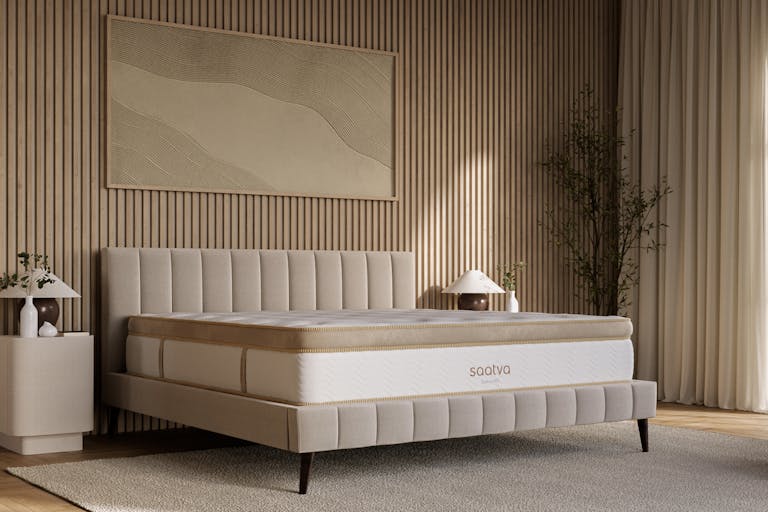
- Saatva Classic: For sleepers whose budget can stretch toward the $1,000 mark, the Saatva Classic serves as our gold standard for long-term spinal health. Utilizing a dual-coil core consisting of tempered active wire innersprings topped with pocketed micro-coils, it delivers the edge support and lumbar alignment usually reserved for beds twice its price.

The Hidden Traps: Fine Print, Expansion, and Foundations
Buying an inexpensive mattress requires extra diligence during the unboxing and trial phase. Before discarding the packaging, review How Long Does a Mattress in a Box Take to Expand? (Plus Off-Gassing Tips). Denser budget memory foams can take 48 to 72 hours to achieve their full nominal height and release volatile organic compounds (VOCs). Sleeping on a compressed mattress too early can permanently deform edge foam cells that have not fully drawn in ambient air.
Understand the contractual safety net. As detailed in Understanding Mattress Sleep Trials: Break-In Periods & Hidden Return Fees, low-cost manufacturers may offer a 100-night trial while charging a non-refundable $99 return processing fee. Closely read How to Read a Mattress Warranty (And What Actually Voids Your Coverage) to confirm your base meets structural criteria. Many budget mattress warranties require center support legs and slat spacing under three inches; failing to verify this via our guide on Slats, Platform Beds, Box Springs & Adjustable Bases: What Your Mattress Needs can nullify your consumer protections on day one.
Maintaining Longevity on a Budget
Because value foams have lower initial tensile strength, ongoing maintenance directly determines your mattress lifespan. Implement a disciplined rotation schedule via our Should You Flip or Rotate Your Mattress? Brand-by-Brand Maintenance Schedule. Rotating a budget mattress 180 degrees every 90 days redistributes body impressions and delays permanent foam troughs along the hip axis.
Knowing How Often Should You Replace Your Mattress? 7 Signs It's Done keeps you proactive about sleep quality. If you awaken with persistent lower back stiffness or notice edge roll-off when sitting, the internal support system has deteriorated regardless of surface appearance. Check current incentives on our Mattress Deals & Coupons portal before settling for a replacement.
Final Verdict
A cheap mattress does not have to compromise your musculoskeletal health. If you are a strict side sleeper seeking joint relief on a shoestring budget, the all-foam architecture of the Nectar Memory Foam provides high-value motion deadening and pressure diffusion. Back sleepers, combination sleepers, and those needing extra airflow should opt for the hybrid construction of the DreamCloud Premier. For maximum durability, investing slightly more into the dual-coil infrastructure of the Saatva Classic provides the best long-term cost per night.
Frequently Asked Questions
How long can I realistically expect a cheap mattress to last?
An all-foam mattress priced under $500 with a base foam density around 1.5 PCF typically provides 3 to 5 years of supportive sleep before indentation exceeds acceptable thresholds. Value hybrid mattresses with tempered 14-gauge steel coils often sustain proper spinal alignment for 6 to 8 years if rotated regularly.
Will a cheap mattress cause lower back pain?
A mattress causes back pain when its comfort layers compress prematurely, dropping your hips below your shoulders and putting the lumbar spine into extension. To avoid this, back and stomach sleepers on a budget should prioritize pocketed coil hybrids or high-density foams rated 6.5 out of 10 or firmer on the firmness scale.
Are fiberglass-free covers available on budget mattresses?
Yes, but you must verify the inner fire-retardant sock materials. Many ultra-cheap beds under $300 use woven fiberglass yarn as an inexpensive flame barrier. Reputable value brands have transitioned to rayon blends, chemical-free thistle, or hydrated silica socks. Always check product tags before purchasing.

Jessica Moore, Certified Sleep Science Coach
Jessica has spent 8+ years analyzing biomechanics, pressure relief mapping, and mattress ergonomics. She leads our independent sleep lab in Austin, TX, overseeing thermal, motion, and durability testing.