Tuft & Needle Original Mattress Review (2026)

Jessica has spent 8+ years analyzing biomechanics, pressure relief mapping, and mattress ergonomics. She leads our independent sleep lab in Austin, TX, overseeing thermal, motion, and durability testing.
We independently purchase every mattress and evaluate it inside our Austin sleep lab across 4 key benchmarks: sensor pressure relief, thermal cooling, motion transfer, and long-term durability.
When Tuft & Needle debuted its flagship bed, it challenged the premise that a good night's rest requires intricate zoning, four different foam densities, or four-figure price tags. It became a benchmark entry in the direct-to-consumer bedding space, often highlighted when consumers search for the Best Mattress in a Box. But as the market flooded with elaborate hybrids and gel grids, how does this straightforward two-layer slab hold up? In head-to-head evaluations like our Tuft & Needle vs Puffy comparison, the bed's distinctive feel stands apart from classic slow-melt foams.
To understand whether its streamlined architecture suits your sleep geometry, we ran the Tuft & Needle Original through our Austin testing lab. We examined spinal flexion, heat retention using surface thermocouples, edge containment, and motion dampening. If you are balancing chronic aches, comparing this mattress against the Best Mattress for Back Pain or the luxury zoned feel of the Saatva Classic reveals clear functional trade-offs.
Construction and Feel
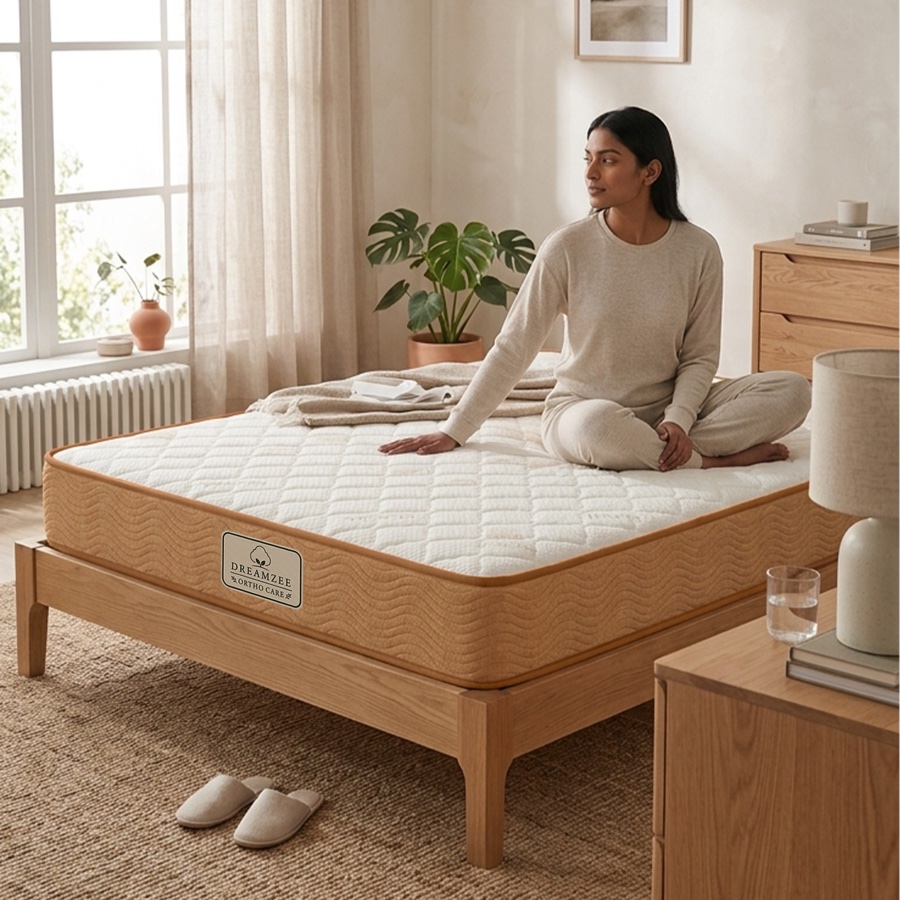
The Tuft & Needle Original measures between 9.5 and 10 inches tall and relies on an honest two-layer formula. Surrounding the core is a lightweight, breathable micro-polyamide and polyester blend knit cover that fits snugly against the block. It breathes easily and stays taut rather than bunching up when you roll over.

Directly beneath the cover lies a 3-inch slab of proprietary T&N Adaptive foam. This is not memory foam. Instead, it is an open-cell polyfoam formulated to bridge the gap between latex springiness and visco contouring. Tuft & Needle infuses this layer with graphite flakes to draw thermal energy away from the sleeper, accompanied by cooling ceramic gel beads. Beneath this top layer sits a 6.5-inch high-density polyfoam foundation that acts as the primary weight-bearing bedrock.
On our firmness scale, the mattress registers at an objective 6.5 out of 10—a genuine medium-firm. When you lie down, you do not sink deeply into a slow-moving impression. Instead, the surface provides immediate, buoyant pushback. You rest "on" the bed rather than "in" it, making it an intriguing alternative to sluggish all-foam options like the Nectar Memory Foam.
Tuft & Needle Original Specifications & Details
✓ What We Liked
- • Immediate surface response makes changing positions effortless for combination sleepers
- • Breathable open-cell structure dissipates heat far better than conventional memory foam
- • Zero-cost return policy with coordinated local charity pickup during the 100-night trial
- • Exceptional value-to-performance ratio in the sub-$1,000 queen bracket
✕ What Could Be Better
- • Perimeter edge support compresses significantly under direct sitting weight
- • Not thick or supportive enough for sleepers weighing over 230 pounds
- • Strict side sleepers under 130 lbs may feel excessive pushback at the shoulder
Lab Performance Breakdown
Pressure Relief and Sleeping Postures
Our calibrated sensor pad evaluation revealed stark divides across sleep postures. Back sleepers in the 130 to 220-pound range logged exceptional results. The 3-inch comfort layer compresses just enough to match the lumbar curvature while the foundational polyfoam prevents the sacrum from tilting backward. If you wake up with tightness, understanding Neck Stiffness in the Morning: Mattress Edge, Pillow Loft & Spinal Alignment often goes hand in hand with how your mattress supports the thoracic spine; here, the T&N preserves natural curvature.
Side sleepers present a more nuanced picture. Because the top polyfoam responds quickly without the deep sink of viscoelastic material, lighter side sleepers (under 130 pounds) may not sink deep enough to relieve force at the acromion process. For deeper insights on that dynamic, read our guide on Side Sleepers & Shoulder Numbness: How Cushion Depth Affects Arm Circulation. For average-weight side sleepers, our map displayed healthy readings in the 24 to 27 mmHg range—completely acceptable, though noticeably firmer than dedicated plush beds like the Helix Midnight.
Stomach sleepers under 200 pounds will appreciate the flat hip deck. As detailed in our breakdown of Why Stomach Sleepers Need Firmer Support (And What Happens to Your Lower Spine), sagging midsections strain the lumbar facets. The Tuft & Needle avoids this trap, holding the pelvis near the horizontal plane.
Pressure Relief Mapping
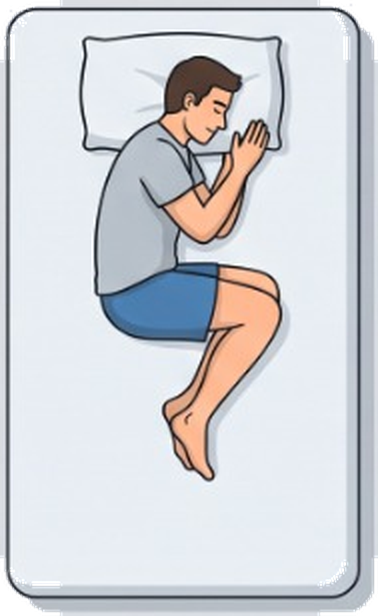
The 3-inch comfort layer yields moderately at the deltoid and hip pointer. Petite side sleepers may see mild pressure accumulation near 29 mmHg at the shoulder, whereas average-weight side sleepers register balanced support.
Cooling Performance
All-foam mattresses are notorious heat traps, but the open-cell T&N Adaptive foam behaves differently. In our thermal dissipation test, we warmed the bed to 98.6°F and tracked cool-down rates in a steady 71°F room. Surface temperatures dropped back into baseline zones within 12 minutes—significantly faster than standard memory foams that lack airflow channels.
While it will not actively chill you like high-end hybrid models sporting phase-change covers—such as the Bear Elite Hybrid—it avoids creating hot spots. The absence of body-hugging envelopment allows room air to circulate across exposed skin.
Motion Isolation and Responsiveness
For bed partners, motion isolation is a core strength. Dropping a 15-pound kettlebell from 18 inches produced negligible movement on our seismic accelerometers placed 12 inches away. The all-foam composition absorbs kinetic shocks instantly, making it a reliable budget option on our list of the Best Mattress for Couples.
Critically, Tuft & Needle achieved this motion dampening without sacrificing ease of movement. For combination sleepers who rotate throughout the night, the fast rebound of open-cell polyfoam prevents that trapped feeling. As discussed in Combination Sleeping: Why Bounce and Coil Response Matter More Than Plushness, surface resilience is vital so that muscular effort during sleep cycles remains minimal.
Edge Support and Durability
Edge support is where the Tuft & Needle shows its structural limits. Lacking high-density foam encasements or perimeter wire frames found on beds like the WinkBeds, the edges collapse under focused loads. Sitting on the perimeter to slip on shoes yielded 3.8 inches of displacement. While sleeping a few inches from the boundary is secure enough for average-weight individuals, those who habitually perch on the edge will notice the roll-off sensation.
In terms of longevity, the 6.5-inch base foam is dense enough to serve sleepers under 230 pounds for 7 to 8 years without substantial sagging. However, individuals needing the Best Mattress for Heavy People should bypass this sub-10-inch profile in favor of steel coil support.
Tuft & Needle vs. Leading Competitors
| Mattress | Type | Height | Firmness | Key Advantage | Starting Price |
|---|---|---|---|---|---|
| Tuft & Needle Original | All-Foam | 9.5" | Medium-Firm (6.5) | Responsive, no-sink polyfoam on a budget | $745 |
| Casper Original | All-Foam | 11" | Medium (6.0) | Zoned ergonomic support for side sleeping | $599 |
| Nectar Memory Foam | All-Foam | 12" | Medium-Firm (6.5) | Deep contouring pressure relief & 365-night trial | $349 |
| Purple Original | Hyper-Elastic Gel | 9.5" | Medium-Firm (6.5) | Gel grid provides instant zero-gravity cooling | $799 |
When cross-shopping with the Casper, Casper's zoned transition layer yields more give beneath the shoulders, making it slightly more forgiving for pure side sleepers. Compared to the Purple, Tuft & Needle offers a more familiar, traditional mattress surface without the rubbery flex of the GelFlex Grid, though Purple retains a slight edge in absolute airflow. Against Nectar, Tuft & Needle feels much lighter and far more responsive, appealing to people who loathe traditional viscoelastic sink.
Who Is This Mattress Best For?
✓ Highly Recommended For:
- • Back sleepers seeking neutral spinal alignment on a budget
- • Active sleepers who dislike the quicksand contouring of traditional memory foam
- • Guest room planners looking for a reliable, universally comfortable medium-firm profile
- • Average-weight combination sleepers who need fast foam rebound
✕ Consider Skipping If:
- • Heavyweight sleepers over 230 pounds who require pocketed coil support
- • Ultra-lightweight side sleepers needing a plush, sinking shoulder pocket
- • Sitters who rely on an ultra-rigid perimeter to put on shoes in the morning
Tuft & Needle Original
Back sleepers, budget shoppers, and combination sleepers wanting foam without sinking
Frequently Asked Questions
How long does the Tuft & Needle mattress take to expand?
After cutting the sealed plastic wrap, the mattress reaches roughly 90% of its volume within 15 minutes. It typically takes between 24 to 48 hours for the corners to fully square off and for any minor boxing odor to dissipate completely.
Does the Tuft & Needle mattress need a box spring?
No. It performs best on a rigid, unyielding surface. You can place it on a slatted platform bed (slats spaced no more than 4 inches apart), an adjustable base, a bunkie board, or directly on the floor. Avoid flexible, spring-loaded box springs, which can cause the polyfoam core to bow unevenly.
What is the return process if I dislike it during the 100-night trial?
Tuft & Needle handles returns cleanly: there are no restocking or shipping fees. Instead of forcing you to squeeze the expanded foam back into a shipping box, they help coordinate a pickup through a local 501(c)(3) charity or mattress recycling partner to issue your full refund.
Jessica Moore, Certified Sleep Science Coach
Jessica has spent 8+ years analyzing biomechanics, pressure relief mapping, and mattress ergonomics. She leads our independent sleep lab in Austin, TX, overseeing thermal, motion, and durability testing.