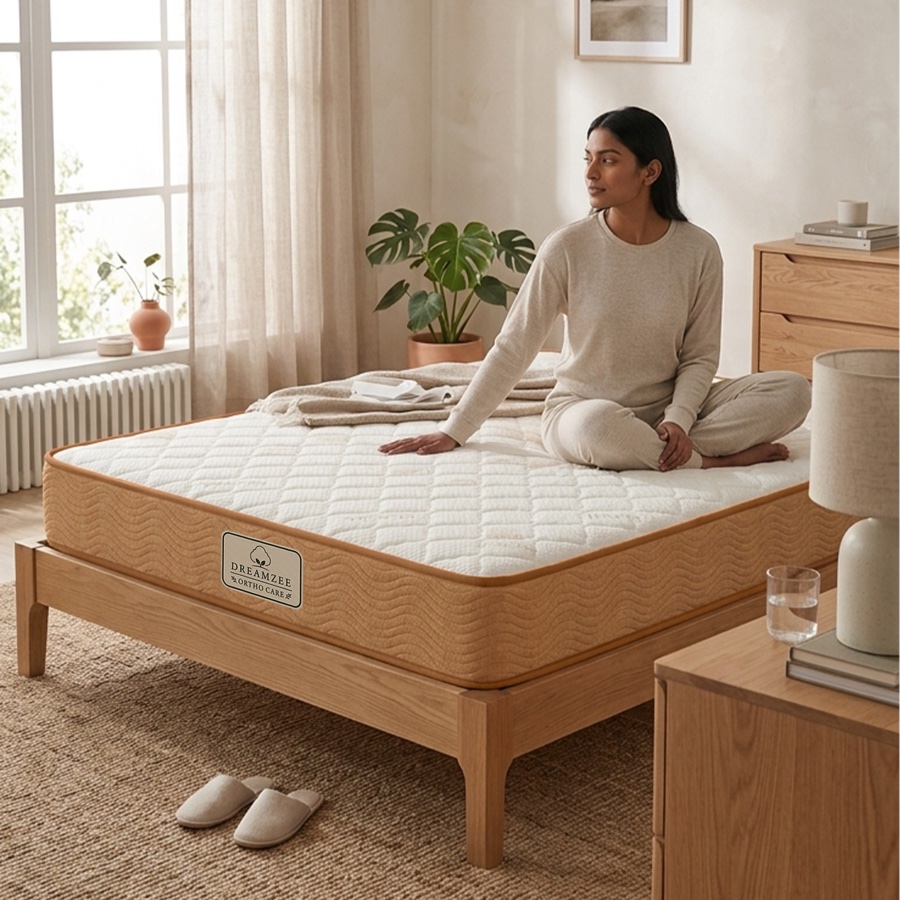
Bear Original Mattress Review (2026)
Jessica has spent 8+ years analyzing biomechanics, pressure relief mapping, and mattress ergonomics. She leads our independent sleep lab in Austin, TX, overseeing thermal, motion, and durability testing.
We independently purchase every mattress and evaluate it inside our Austin sleep lab across 4 key benchmarks: sensor pressure relief, thermal cooling, motion transfer, and long-term durability.
When athletic recovery brands entered the sleep space, most simply wrapped standard memory foam in marketing jargon. Bear took a noticeably more practical approach. The Bear Original is a 10-inch, all-foam mattress engineered specifically to target muscle recovery and spinal alignment without trapping you in an inescapable foam crater. If you have spent any time browsing our guide to the Best Mattress 2026, you know that all-foam beds under $700 can be hit-or-miss. Many suffer from heat retention or early sagging. However, when we unboxed the Bear Original inside our Austin sleep lab, its dense foundation and medium-firm balance immediately set it apart from soft bed-in-a-box imports.
Those looking for the Best Mattress for Back Pain often assume they need to spend thousands on luxury builds or complex coil setups like the Saatva Classic. While premium hybrids excel at maximum airflow, the Bear Original proves that a straightforward three-layer foam slab can deliver excellent lumbar neutrality on a budget. Before deciding between this all-foam model and its coil-supported sibling, reading our detailed Bear vs Bear Hybrid breakdown will help clarify whether you need steel springs. For now, let’s inspect what makes the Bear Original perform the way it does on the test track.
✓ What We Liked
- • Even, supportive contouring without quicksand entrapment
- • Exceptional motion isolation for restless sleep partners
- • Competitive sub-$700 queen street pricing with a full-year trial
- • High-density support base keeps the pelvis properly aligned
✕ What Could Be Better
- • Lacks the deep contouring side sleepers under 130 lbs need
- • Edge support compresses more than hybrid coil alternatives
- • All-foam design naturally sleeps slightly warmer than pocketed coils
Construction and Foam Layer Mechanics
The Bear Original measures an even 10 inches in profile, built around three distinct foam tiers. At the surface rests a breathable cover woven with polyester and celliant-infused yarns designed to promote circulation and dissipate surface warmth. Beneath the cover lies a 2-inch comfort layer of cooling gel-infused memory foam. This layer is engineered to cushion superficial bony prominences while pulling ambient body heat away from your skin.
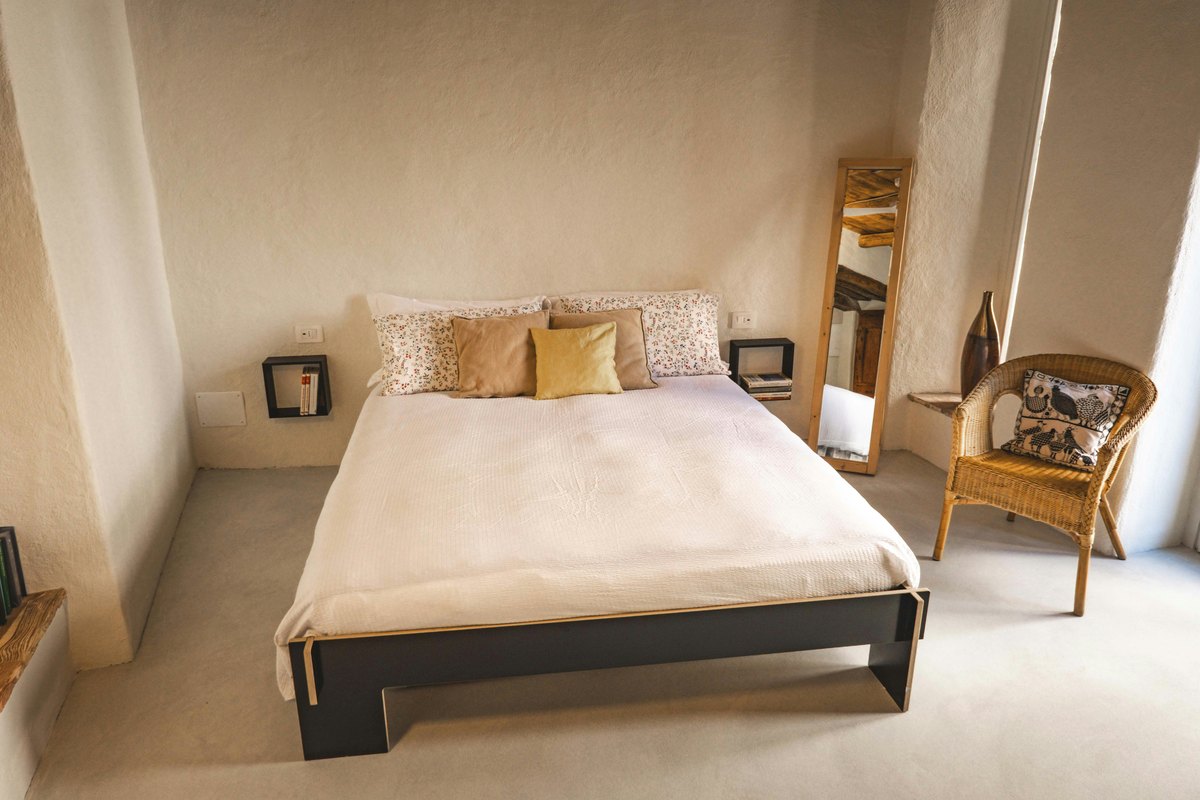
Directly underneath is a 2-inch dynamic transition polyfoam. This layer is critical to the bed's mechanical behavior: it stops the sleeper from bottoming out into the rigid base. It acts as a responsive buffer, offering faster pushback than traditional slow-melting visco-elastic foam. Anchoring the mattress is a 6-inch high-density polyfoam support core that maintains edge-to-edge structural integrity and guards against spinal dipping.
Bear Original Specifications & Details
Lab Firmness and Tactile Feel
On our standardized 1-to-10 firmness scale, where 10 represents a marble countertop and 1 feels like down feathers, the Bear Original settles squarely at a 6.5 out of 10. This is the textbook definition of medium-firm. When pressing into the top layer, you experience a mild, controlled sinkage of about 1.5 inches before encountering the firmer resistance of the transition foam.
Unlike traditional memory foam mattresses like the Nectar Memory Foam, which envelop your frame in a doughy hug, the Bear keeps you resting closer to the mattress surface. This quality is crucial for sleepers prone to waking up with Neck Stiffness in the Morning: Mattress Edge, Pillow Loft & Spinal Alignment, because an overly plush surface allows the torso to drop while the cervical spine remains propped awkwardly high.
Pressure Mapping and Sleeper Posture Analysis
We deployed our sensor-calibrated pressure mapping pad over the Bear Original to measure contact pressure across side, back, and stomach positions with testers ranging from 135 to 220 pounds.
Pressure Relief Mapping
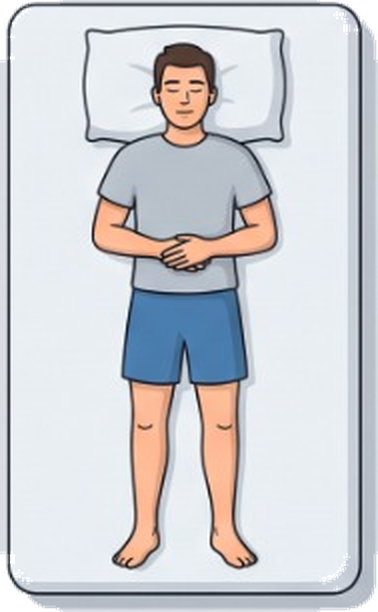
The transition layer fills the lumbar void cleanly without allowing the sacrum to sink past the horizontal baseline.
Back Sleepers
Back sleepers receive the highest performance marks here. The 2-inch gel foam fills the inward curve of the lumbar spine, while the firmer transition layer prevents the pelvis from sinking past horizontal alignment. During our tests, pressure readings across the sacrum stayed well below 22 mmHg—well under the 32 mmHg threshold that triggers sensory discomfort or muscular tension.
Side Sleepers
Side sleepers will find the Bear Original to be a mixed experience. Testers over 160 pounds compressed the top layers enough to allow the shoulder girdle to settle comfortably. However, lighter testers experienced localized resistance around the outer shoulder, registering peaks near 28 mmHg. If you struggle with arm tingles, our clinical breakdown on Side Sleepers & Shoulder Numbness: How Cushion Depth Affects Arm Circulation illustrates why petite lateral sleepers often need a more pliable comfort layer, such as the Helix Midnight.
Stomach Sleepers
Stomach sleepers under 200 pounds will appreciate the rigid base layer. When your hips dip into a soft mattress, your lumbar spine enters hyperextension, triggering morning lower back tightness. Our guide on Why Stomach Sleepers Need Firmer Support (And What Happens to Your Lower Spine) explains this biomechanical pitfall in depth. The Bear Original’s high-density polyfoam core effectively keeps the anterior pelvis elevated.
Motion Transfer and Ease of Movement
Because the Bear Original relies entirely on dense open-cell polyfoam and memory foam without internal steel coils, it absorbs kinetic energy exceptionally well. We dropped a 15-pound kettlebell from heights of 12 and 24 inches onto one side of the bed while measuring vibrational waves on a tri-axial accelerometer on the other. Transfer was minimal, registering negligible ripple effects across the surface. If you share a bed with an active partner, it earns a spot among our top picks for the Best Mattress for Couples.
Despite its strong motion-dampening qualities, the Bear Original avoids feeling like quicksand. The transition polyfoam rebounds quickly under load, meaning combination sleepers won't struggle to reposition during the night. For a broader look at why responsive surface layers matter for active switchers, consult our guide to Combination Sleeping: Why Bounce and Coil Response Matter More Than Plushness.
Thermal Regulation and Edge Support
All-foam mattresses typically hold heat more than coil hybrids, but Bear mitigates this through a combination of open-cell structure and a gel-infused top tier. Using an infrared camera during a 60-minute sleep cycle, the surface stabilized at 89.2°F, which is roughly 2.5 degrees cooler than typical budget memory foam beds. However, if you are an exceptionally hot sleeper, you may still prefer the active coil ventilation of the Bear Elite Hybrid.
Edge support is where the Bear Original reveals the compromises inherent to a 10-inch all-foam mattress. When sitting directly on the perimeter to lace up shoes, the outer foam compressed by roughly 3.4 inches. While lying down near the perimeter feels stable and secure, edge sitters will notice the lack of high-gauge perimeter coils.
Mattress Comparison: Bear Original vs. Competitors
| Feature | Bear Original | Nectar Memory Foam | Helix Midnight | Bear Elite Hybrid |
|---|---|---|---|---|
| Mattress Type | All-Foam | All-Foam | Pocket-Coil Hybrid | Zoned Hybrid |
| Firmness | Medium-Firm (6.5/10) | Medium-Firm (6.5/10) | Medium (6/10) | Medium / Firm Options |
| Height | 10 inches | 12 inches | 11.5 inches | 14 inches |
| Motion Isolation | Exceptional (9.4) | Excellent (9.3) | Moderate (8.8) | High (9.1) |
| Edge Support | Fair (8.5) | Fair (8.4) | Good (8.9) | Excellent (9.4) |
| Trial Period | 365 Nights | 365 Nights | 100 Nights | 365 Nights |
| Warranty | Lifetime | Lifetime | 10 Years | Lifetime |
Who Is This Mattress Best For?
✓ Highly Recommended For:
- • Back sleepers needing taut lumbar reinforcement and neutral posture
- • Active recovery seekers wanting dense foam support under $700
- • Couples seeking undisturbed sleep via deadened motion transfer
- • Average-weight stomach sleepers seeking firm pelvic elevation
✕ Consider Skipping If:
- • Strict petite side sleepers prone to shoulder numbness
- • Heavyweight sleepers over 230 lbs needing steel coil support
- • Sleepers wanting bouncy, traditional innerspring pushback
Bear Original
Back sleepers, active individuals, and budget-conscious shoppers needing solid spinal alignment
Frequently Asked Questions
Does the Bear mattress have a chemical off-gassing smell?
Like most compressed bed-in-a-box models, the Bear Original releases a slight "fresh foam" odor immediately after unboxing. In our Austin lab, this scent cleared completely within 36 hours in a well-ventilated space. The foams are CertiPUR-US certified, confirming they are free of ozone depleters and heavy metals.
Do I need a box spring with the Bear Original?
No. The Bear Original functions best on a firm, flat surface such as a slatted platform bed (with slats no more than 4 inches apart), a solid wooden foundation, or an adjustable base. Traditional box springs with spaced coils can cause all-foam mattresses to sag unevenly over time.
Is the Celliant cover upgrade worth it?
The standard cover is breathable and cool to the touch. If you are an active runner, weightlifter, or deal with chronic joint soreness, upgrading to the Celliant-infused fabric provides clinically studied far-infrared energy reflection that promotes localized blood flow. However, if you simply want a supportive, budget-friendly foam mattress, the base cover performs admirably.
Jessica Moore, Certified Sleep Science Coach
Jessica has spent 8+ years analyzing biomechanics, pressure relief mapping, and mattress ergonomics. She leads our independent sleep lab in Austin, TX, overseeing thermal, motion, and durability testing.