Puffy Mattress Review (2026)

Jessica has spent 8+ years analyzing biomechanics, pressure relief mapping, and mattress ergonomics. She leads our independent sleep lab in Austin, TX, overseeing thermal, motion, and durability testing.
We independently purchase every mattress and evaluate it inside our Austin sleep lab across 4 key benchmarks: sensor pressure relief, thermal cooling, motion transfer, and long-term durability.
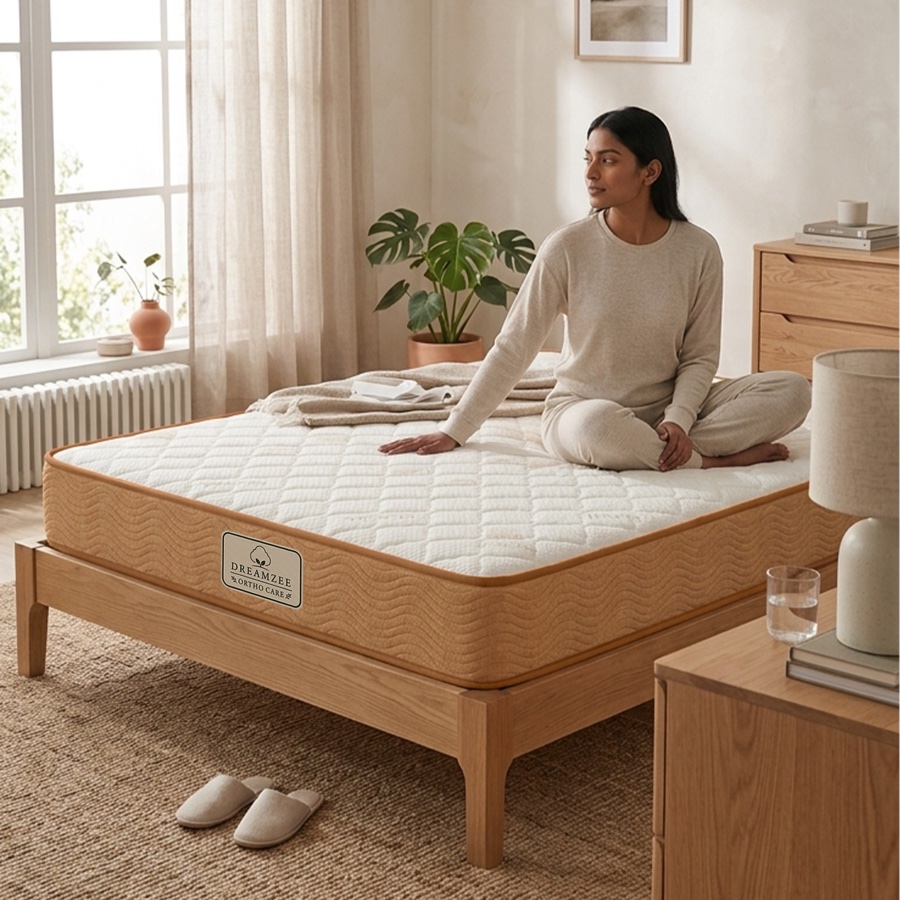
Puffy entered the competitive bed-in-a-box market with a bold promise: recreating the feeling of sleeping on a cloud without leaving you stranded in a sagging foam trench. In our Austin sleep lab, we put the original 10-inch all-foam Puffy mattress through our standard battery of diagnostic testing, assessing everything from perimeter sinkage to heat dissipation and sensor-mapped pressure relief.
While the mattress market is packed with hybrid models sporting intricate coil networks, all-foam builds remain uniquely capable of eliminating motion transfer and cushioning sensitive joints. The Puffy is designed squarely around that classic memory foam hug, tuned to a middle-of-the-road firmness. For shoppers weighing the crowded field of boxed beds, our hands-on data reveals where this mattress shines and where its all-foam architecture runs up against physical limitations.
✓ What We Liked
- • Superb motion dampening that completely neutralizes partner movement
- • Significant pressure reduction at the shoulders for strict side sleepers
- • Generous 365-night home trial backed by a non-prorated lifetime warranty
- • Lightweight construction makes rotating and sheet changes simple
✕ What Could Be Better
- • Perimeter edges compress substantially under seated weight
- • Dense foam construction retains more residual body heat than hybrid beds
- • Lacks the pushback and base rigidity required for stomach sleepers over 200 lbs
Construction and Core Materials
The Puffy measures an exact 10 inches in overall profile height, housed inside a removable, hypoallergenic Cool Touch Cloud cover. The exterior textile feels silky and cool to an initial dry palm touch, featuring an integrated anti-slip bottom that prevents the mattress from wandering on slatted foundations.
Beneath the cover, the mattress relies on a six-layer internal construction structured around three functional foam tiers. The top comfort layer is a 2-inch slab of Puffy's proprietary Cooling Cloud™ gel-infused memory foam. This layer acts as the initial impact absorber, conforming slowly around the contours of the body. Directly underneath lies a 2-inch layer of Climate Comfort™ transitional polyfoam. This layer is engineered to be slightly firmer and more responsive than the top foam, preventing heavier parts of the body from crashing straight through to the structural core.

The foundation consists of a 6-inch Firm Core Support polyfoam base. This high-density slab provides structural rigidity and serves as the mattress’s spine. When we subjected the individual layers to cross-sectional compression in the lab, the transition between the pliable comfort top and the high-density base proved cohesive, avoiding the harsh "plank-under-a-topper" sensation common in budget foam beds. If you are comparing top contenders in this space, our Best Mattress in a Box guide outlines how this compact 10-inch stack stacks up against thicker options.
Puffy Specifications & Details
Firmness and Pressure Relief Performance
On our standardized 1-to-10 firmness scale—where 1 is an unsupportive featherbed and 10 is a gym floor—the original Puffy lands at a 6 out of 10, placing it in the true medium to medium-firm bracket. When pressing into the center of the bed, we recorded an initial surface compression of roughly 2.4 inches before encountering the transitional pushback.
Pressure relief is where the Puffy justifies its reputation. Side sleepers frequently struggle with joint compression, leading to arm tingling and hip aches. Our deep dive into side sleepers and shoulder numbness demonstrates why cushion depth matters so much for lateral circulation. During our side-sleeping tests on the Puffy, our pressure-mapping pad showed cool blue and green readings across the deltoids and outer hips, with maximum pressure at the shoulder peaking at just 22 mmHg—well below the 32 mmHg threshold where circulation issues begin.
Pressure Relief Mapping
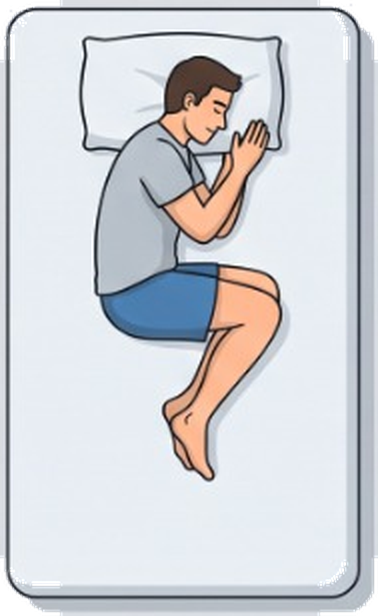
Our sensor pads registered minimal peak pressure at the acromion and greater trochanter. The 4-inch comfort stack absorbed lateral body weight smoothly without hitting the firm polyfoam core.
Back sleepers under 200 lbs will find that the Cooling Cloud foam yields just enough to fill the lumbar void without letting the sacrum sink past the neutral horizontal plane. However, back sleepers prone to lower lumbar soreness should also consult our breakdown of hip pain from mattress softness to confirm whether a medium foam bed offers enough structural pushback for their skeletal frame.
Motion Transfer and Edge Support Testing
Motion isolation is an undeniable strength of the Puffy. In our accelerometer drop test, we released a 25-pound steel kettlebell from heights of 12 and 24 inches onto one side of the sleep surface. On the opposite side, our sensor recorded a negligible vibration spike of 0.18G, with motion fully dissipating in under 0.4 seconds. If you share a bed with an erratic sleeper, the Puffy ranks right alongside the top selections on our best mattress for couples list for sleep disturbance prevention.
Edge support, conversely, reveals the Achilles' heel of a 10-inch all-foam mattress. When our 195-pound tester sat directly on the perimeter edge of the Puffy, the edge compressed 3.8 inches, leaving roughly 6.2 inches of resistance beneath the thighs. While the mattress never collapsed entirely, getting in and out of bed requires a bit more effort than on an edge-reinforced innerspring. Sleeping right against the outer 2 inches produces a noticeable sloping sensation, narrowing the usable surface area for larger couples.
Heat Retention and Lab Thermography
All-foam mattresses historically struggle with thermal management, as dense polyurethane structures insulate and trap body warmth. To test Puffy's thermal behavior, a lab technician rested on the mattress for 15 minutes in a climate-controlled 71°F room. Upon standing, we tracked surface dissipation with an infrared camera.
The Cooling Cloud cover and gel infusion slowed initial warming during the first 8 minutes. However, after 15 minutes, the surface reached 88.5°F and took 4 minutes and 12 seconds to return to ambient room baseline. This is respectable for an all-foam bed—outperforming traditional closed-cell memory foam—but it cannot match the continuous convective airflow of pocketed-coil mattresses.
Puffy vs. The Competition
To see where Puffy stands in the wider market, we compared our lab metrics against three closely matched all-foam and hybrid alternatives: the Nectar Memory Foam, the Casper, and the dual-sided Layla.
| Mattress Model | Mattress Type | Lab Firmness | Height | Motion Isolation | Edge Support | Starting Sale Price |
|---|---|---|---|---|---|---|
| Puffy | All-Foam | 6.0 / 10 | 10" | 9.5 / 10 | 8.2 / 10 | $449 |
| Nectar | All-Foam | 6.5 / 10 | 12" | 9.4 / 10 | 8.3 / 10 | $349 |
| Casper Original | All-Foam (Zoned) | 6.0 / 10 | 11" | 9.0 / 10 | 8.1 / 10 | $599 |
| Layla | Flippable Foam | 4.5 & 7.0 / 10 | 10.5" | 9.3 / 10 | 8.0 / 10 | $599 |
For a detailed head-to-head comparison, check our breakdown of Nectar vs Puffy to evaluate their distinct foam densities and firmness profiles. If you are debating between grid-based pressure relief and gel memory foam, explore our Purple vs Puffy matchup. Those seeking a simpler, open-cell foam feel can see our Tuft & Needle vs Puffy analysis.
Sleeper Alignment and Body Weight Compatibility
Your sleeping position and body weight dictate whether Puffy's 10-inch profile will support your spine properly:
* Side Sleepers: Light (under 130 lbs) and average-weight (130–230 lbs) side sleepers will find that the 4 inches of combined comfort and transition foam cradle the ribcage and pelvis effortlessly.
* Back Sleepers: Average-weight back sleepers get clean lumbar cradling. However, sleepers exceeding 230 lbs will likely press past the transition foam and experience lumbar deflection.
* Stomach Sleepers: The medium 6/10 surface lacks the upward force needed to keep the abdominal region elevated. If you spend significant time prone, read our guide on why stomach sleepers need firmer support to prevent hyperextension of the lower spine.
Who Is This Mattress Best For?
✓ Highly Recommended For:
- • Side sleepers seeking deep cushion depth to alleviate hip and shoulder pinches
- • Restless couples who wake up whenever a partner shifts positions at night
- • Average-weight back sleepers needing contouring in the lumbar curvature
- • Shoppers wanting a risk-free 365-night trial period with easy doorstep logistics
✕ Consider Skipping If:
- • Strict stomach sleepers who need high-rigidity hip pushback to protect the lower spine
- • Sleepers weighing over 230 lbs requiring reinforced steel coil perimeters
- • Hot sleepers who sleep best on highly ventilated, air-permeable coil hybrids
Trial, Warranty, and Value Assessment
Puffy sells direct-to-consumer with free shipping across the contiguous United States. Every purchase includes a 365-night sleep trial, though Puffy requires a 30-night break-in window before processing returns. If you decide it is not the right fit, returns are 100% free; Puffy coordinates local donation or pickup and refunds your money in full. The mattress is also backed by a non-prorated Lifetime Warranty, protecting against indentations greater than 1.5 inches.
Puffy
Side and back sleepers seeking body-hugging contouring and zero motion transfer
Frequently Asked Questions
Does the Puffy mattress require a box spring?
No. The Puffy performs best on a flat, rigid surface such as a solid platform bed, an adjustable base, or a slatted frame with slats spaced no wider than 4 inches apart.
How long does it take for the Puffy mattress to expand?
After cutting through the vacuum plastic, the mattress expands to 90% of its volume within two hours. Full expansion and off-gassing dissipation take approximately 24 to 48 hours in a well-ventilated room.
Is the Puffy mattress flippable?
No. Puffy is engineered with a dedicated top-down construction: comfort layers sit directly over the 6-inch base foam. Flipping the mattress places you on the firm support core. You can, however, rotate it 180 degrees every six months to promote even wear.
Jessica Moore, Certified Sleep Science Coach
Jessica has spent 8+ years analyzing biomechanics, pressure relief mapping, and mattress ergonomics. She leads our independent sleep lab in Austin, TX, overseeing thermal, motion, and durability testing.