Key Takeaways
- Memory foam excels in motion isolation, absorbing up to 94% of partner movement on our seismometer drop test.
- Hybrids sleep on average 3.8°F cooler after 45 minutes under FLIR thermal imaging thanks to open coil airflow channels.
- Edge support compression averages 2.1 inches on perimeter-reinforced hybrids versus 3.9 inches on standard all-foam beds.
- Couples with different sleep schedules favor foam; hot sleepers, combo sleepers, and heavier adults thrive on hybrids.
Strip away every flashy brand name, cooling buzzword, and celebrity endorsement in the online mattress industry, and nearly every bed-in-a-box comes down to two fundamental engineering blueprints: all-foam (memory foam) or coil-supported hybrids.
Both camps promise pressure relief and healthy spinal alignment—and on day one in a showroom, a thick memory foam mattress and a plush pillow-top hybrid can feel surprisingly close. Yet inside our Austin sleep lab, thermal cameras, digital seismometers, and mechanical compression rigs reveal clear, repeatable physical differences once you actually live on them night after night.
What Actually Separates All-Foam From Hybrid Construction?
Understanding what sits inside the cover explains 90% of why these two designs behave differently at 3 a.m.:
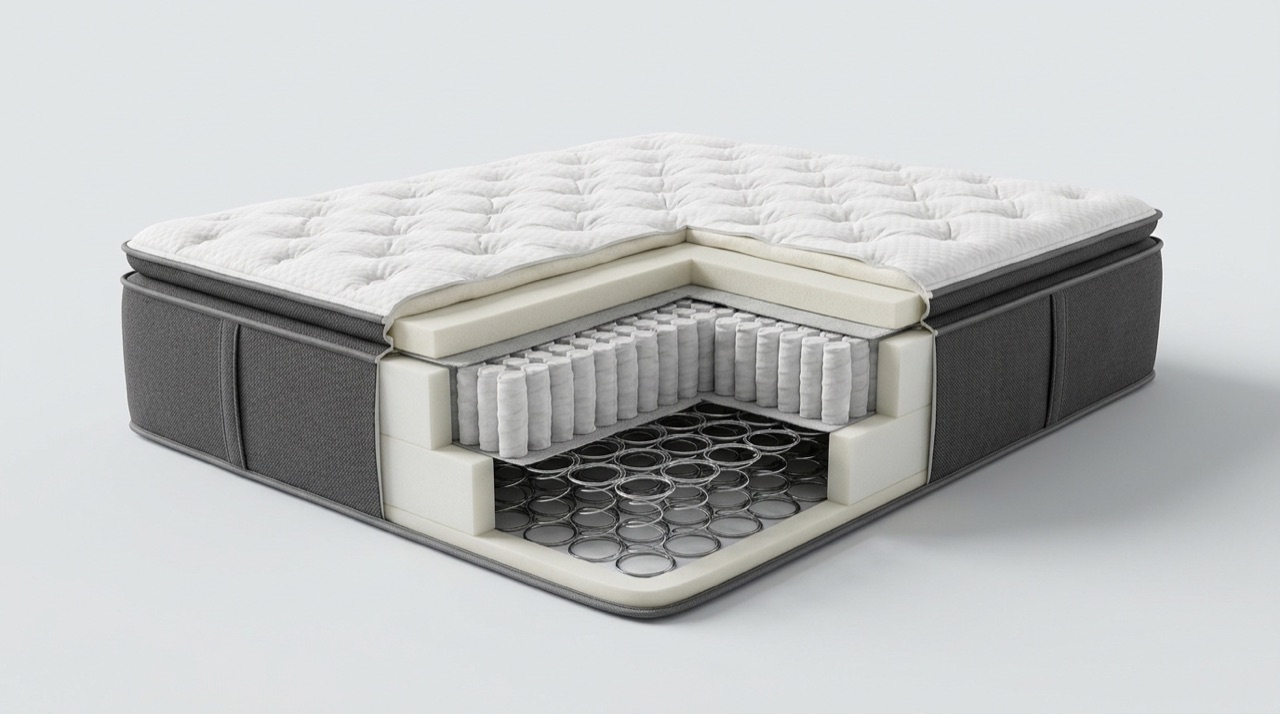
- All-Foam Mattresses (e.g., Nectar Memory Foam): Built entirely from layered polymers—typically 2 to 4 inches of viscoelastic gel memory foam or AirFoam on top, a slightly firmer polyfoam transition layer in the middle, and a thick 6-to-7-inch high-density support foam block at the bottom. Zero metal springs.
- Hybrid Mattresses (e.g., Helix Midnight Luxe, Saatva Classic, DreamCloud Premier): Swap the solid bottom foam slab for 6 to 8.5 inches of individually wrapped tempered steel pocketed coils (or dual-coil tiers), topped with at least 2 to 4 inches of quilted pillow-top, memory foam, latex, or cooling AirFoam.
Head-to-Head Sleep Lab Benchmarks (30+ Tested Beds)
When we average measurements across all foam and hybrid beds tested in our Austin facility, five clear performance gaps emerge:
| Lab Benchmark | All-Foam Average | Hybrid Average | Lab Winner | What It Means in Bed |
|---|---|---|---|---|
| Cooling & Heat Dissipation | 8.8 / 10 (~91–92°F surface) | 9.5 / 10 (~88–89°F surface) | Hybrid | Coils vent warm air downward ~3.8°F cooler |
| Motion Isolation (Couples) | 9.7 / 10 (< 0.35s settle) | 9.1 / 10 (< 0.80s settle) | All-Foam | Pure foam absorbs partner rolling almost silently |
| Edge Support Compression | 3.9" seated corner dip | 2.1" seated corner dip | Hybrid | Perimeter-reinforced coils stop edge roll-off |
| Turning Responsiveness | 8.5 / 10 (slow hug) | 9.4 / 10 (crisp rebound) | Hybrid | Rolling side-to-back takes less muscular effort |
| Entry Price Floor | $349–$699 Queen promos | $699–$1,899+ | All-Foam | Simpler foam construction keeps budget pricing lower |
1. Cooling & Temperature Neutrality (Clear Winner: Hybrid)
Viscoelastic memory foam relies on body heat to soften and contour. Even when infused with cooling gel swirls or copper beads, a thick 12-inch solid foam block traps warmth downward with nowhere for air to escape. In FLIR infrared testing, hybrids ran an average of 3.8°F cooler after 45 minutes because hollow air gaps between pocketed steel coils flush warm air out every time you move. For chronic hot sleepers, specialists like Bear Elite Hybrid (9.9/10 cooling) or Nolah Evolution 15 (9.6/10 cooling) sit in a completely different league from budget foam.
2. Motion Isolation for Light Sleepers (Clear Winner: All-Foam)
Because foam cells deform locally without springs beneath them, dropping a 15-lb kettlebell on one side of the Nectar Memory Foam barely moved the seismometer needle on the opposite edge (9.9/10 isolation). Quality pocketed hybrids still isolate movement well (9.1–9.3/10)—far quieter than old interconnected spring beds—but ultra-light sleepers woken by any subtle shift still favor all-foam.
3. Edge Support & Usable Surface Area (Clear Winner: Hybrid)
If you sit on the corner of your mattress to put on socks, or share a Queen bed with a sprawling partner, perimeter coils make an immediate difference. Standard all-foam beds squish nearly 4 inches downward at the edge, while steel-rail hybrids like Saatva Classic (9.9/10) and DreamCloud Premier (9.6/10) stay noticeably flat.
4. Durability & Heavier-Sleeper Longevity
Above 220–230 lbs, solid polyfoam base cores compress steadily over years of nightly heat and humidity. Tempered steel coils maintain vertical lift far longer—especially in 13.5-to-15-inch zoned hybrids—making hybrids the smarter long-term investment for heavier sleepers.
Sleep Lab Verdict from Jessica Moore: Think of memory foam as a quiet, deep-hugging cocoon built for budget buyers, side sleepers under 200 lbs, and light-sleeping couples—while hybrids act like responsive, breathable suspension built for hot sleepers, back pain relief, heavier adults, and combination sleepers.
Quick Decision Checklist: Which One Should You Buy?
Choose an All-Foam Mattress (Nectar Memory Foam) if:
- Your partner tosses, gets up early, or shares the bed with restless pets.
- You love that slow-sinking, zero-bounce "hug" around shoulders and hips.
- You sleep cool naturally and want the lowest entry price with a 365-night trial.
Choose a Hybrid Mattress (Helix Midnight Luxe, Saatva Classic, Bear Elite Hybrid) if:
- You wake up warm or sweaty on foam beds.
- You rotate between side, back, and stomach overnight (Combination Sleeping Guide).
- You deal with lower-back stiffness or weigh over 210 lbs and need active lumbar zoning.
- You sleep right out to the edges of the bed or need easier support standing up in the morning.
Frequently Asked Questions
Do hybrid mattresses squeak like traditional innerspring beds?
Not modern boxed hybrids. Individual coils are wrapped tightly inside woven fabric sleeves and cushioned by thick top and bottom foam layers, preventing metal-on-metal friction.
Which lasts longer: memory foam or a hybrid?
High-density hybrids generally hold level support 7 to 10+ years, whereas budget entry-level all-foam beds typically begin showing noticeable hip softening around 5 to 7 years under daily adult weight.
Still torn between foam cradling and spring lift? Run our 60-second Sleep Match Quiz, explore Best Mattress 2026, or compare verified promo codes on Mattress Deals & Coupons.
Jessica Moore, Certified Sleep Science Coach
Jessica has spent 8+ years analyzing biomechanics, pressure relief mapping, and mattress ergonomics. She leads our independent sleep lab in Austin, TX, overseeing thermal, motion, and durability testing.